Helpful Hygiene Tips

Willets

Willets

During this morning’s surfing, I discovered the New Yorker’s 2014 best of anthology of their “Shouts and Murmurs” column. There are dozens of entries there and I have chosen to share one or two with you. The first one is dedicated to all those helpful friends and family members [You know who you are!], who over the years have offered Nice-And-Gentle suggestions on how I might correct a grammar / spelling mistake or were simply trying to improve my writing’s overall clarity. I always appreciate your feedback. As an aside, I’m offering a prize to the first such compulsively corrective person who can successfully diagram the following sentence.

Never mind and never fear. I am an, thankfully, expert of sentences. Read on and be disbelieving! There is much to have taught you, and little time, so very, very little and small time. —James Thomas, “How to Write a Sentence” (October 24, 2014)

I bought us a pair of electric toothbrushes earlier this year and I must say that at least for me, they have been a real boon for my dental hygiene. Trips to the hygienist now only rate a 5 on the pain scale, instead of their normal 9. The hygienist even commented on this improvement, before she reminded me that I still need to do more flossing. I subsequently got a water-pick. Technology is the final solution for Nazi hygienists. So it was with some dismay that the other day, I discovered a film of gunk that was starting to bond the base of my electric toothbrush to its charging stand. I then noticed that there was no analogous film on Anne’s electric toothbrush.

My mistake was remarking about this phenomenon to her. She then proceeded to vehemently point out to me that she had read the instructions and that I obviously hadn’t. If I had read the instructions, then I would know better than to just rinse the toothbrush and then return it to its stand. If I had read the instructions then I would know that after each brushing I should disconnect the brush head, rinse it and then dry the head and handle, before reassembling and returning the toothbrush to its stand.

Well, at least I put the cap back on the toothpaste tube.

I love my wife and I love my in-laws, even when they are being too retentive and I’m not talking about water here. Anne is a very easy-going person, my better half, but sometimes she gets into ‘teacher mode’. At those times it is best if I just shut up and go to work. I don’t know what I’m going to do when I retire. Hopefully, she’ll retire then too and this teacher mode will become a passing phase. I’m not so sure though. I think that it has now become ingrained into her psyche, a learned student-produced-response.

7. Student-produced-response math: You have one remaining pair of clean underwear, besides the pair you are currently wearing. You have an additional pair of underwear that doesn’t cover your entire butt and says “Thursday.” How many days can you go without doing laundry? —Cora Frazier, “New S.A.T. Practice Questions” (March 17, 2014)

Let me give you a hint: Today is Saturday.

Anne’s hint: On the first day you wear your underwear normally, on the second, you wear them backwards, on the third day you wear them inside-out and on the fourth day you wear them inside-out and backwards.

Be prepared to show all of your work.

FYSA

San Francisco Pier

San Francisco Pier

What I wanted to write about yesterday, before I became distracted by the twin demons of Wikipedia and continuity, was bubble vocabulary. I’m writing this post before I pick its photo, so any relevance to it is purely serendipity. Bubble vocabulary is words on the bubble. Words which you think you know, but just aren’t sure. Sometimes you use them correctly, sometimes you don’t. When you don’t use them correctly it tells more about your friends then it does about your vocabulary.

My program manager has a better vocabulary than I do. I guess in part that explains why I am working for him and not vice versa. A few of his ‘I’m the smartest person in the room’ words include lubricious, duopoly and sequestration. Sequestration made this list way before it was au currant. I’m still not sure about lubricious. It has two definitions either, offensively displaying or intended to arouse sexual desire or smooth and slippery with oil or a similar substance. I like to think it was the later, it has an aerodynamic feel. I was not there when he used the word. I did recently receive an email from him though. In this email he used a cryptic acronym, FYSA. I had to Google it. I think he meant, For Your Situational Awareness. He is very much into keeping the team in the know, but an alternative definition was Funny You Should Ask, which I liked better. I don’t know why he just didn’t use FYI.

I mentioned serendipity before and at lunchtime I hit upon a related topic. The Ghent online dictionary is holding a quiz. It is a timed quiz where you are presented with 100 English words, except not all of them are real words. Your task is in as quick as is possible is to separate the wheat from the chaff. Your task is to answer yes or no do you know this word. Beware though, because they penalize you for wrong answers. Here is the link for the quiz, it is way better than all those other online quizzes. Don’t use IE like they advise not to.

Electra

Lockheed Electra

Lockheed Electra

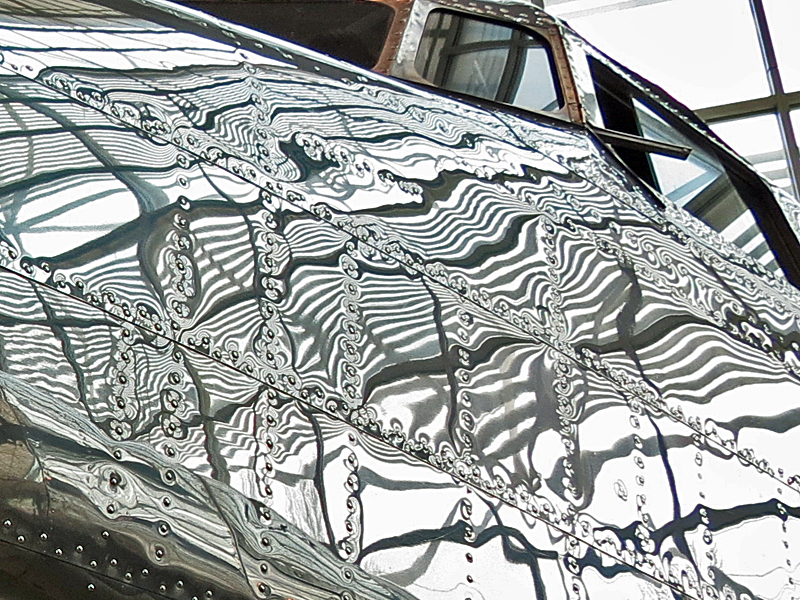
Pictured is a portion of the Lockheed Electra Model 10-E that resides in the Seattle Museum of Flight. This is the same model of this aircraft the Emilia Earhart used in her ill-fated attempt to fly around the world. A similar, but slightly smaller version of this aircraft, the Electra Model 12, was used in the climatic scene of the movie “Casablanca”.

In Greek mythology, Electra was the daughter of King Agamemnon and Queen Clytemnestra. Electra was immortalized in plays by Sophocles and Euripides. She and her brother Orestes plotted revenge against their mother Clytemnestra and stepfather for the murder of their father, Agamemnon. As Greek tragedies go, her story is pretty tragic.

Another mythical Greek character was also called Electra. This Electra is also one of the seven sisters in the Pleiades. She was one of the seven daughters of Atlas. She was raped by Zeus and gave birth to Dardanus, for whom the Dardanelles was named. According to one legend, she was the lost Pleiad, disappearing in grief after the destruction of Troy. The word Electra means “shining” and “bright”.

Electra also appears in psychology as the Electra complex. This is the female equivalent to the male Oedipus complex. In both complexes the child competes with their same-sex parent for the affection of the opposite sex parent. The Electra complex is often associated with the idea of Daddy’s little girl. A classic song by that title is a favorite at white weddings, for when the bride dances with her father. It is amazing what rabbit-holes one can go down with a little Internet research. The lyrics to “Daddy’s Little Girl” are below:

You’re the end of the rainbow, my pot of gold.
You’re daddy’s little girl, to have and hold.
A precious gem is what you are;
You’re mommy’s bright and shining star.

You’re the spirit of Christmas, the star on our tree.
You’re the Easter Bunny to Mommy and me.
You’re sugar, you’re spice, and you’re everything nice
And You’re Daddy’s Little Girl

Mid-January Thaw

No, I’m not referring to the fact that the mercury inched over the freezing mark for the first time in memory.  I’m being much more escapist than that.  My spirit has gone all walkabout and my mind has chosen to follow along.

Today’s new header and the above photo are from last summer, August to be specific and summer vacation not to put too fine a point on the matter.  The new header show’s a view across the water to Mission Hill and a particular sunset that you can only see in the summertime.  The photo with his post shows evergreens viewed from below.  Now they being evergreens, this photo could have been taken in January, but it wasn’t and my viewing of it reinforces my memories of that much warmer time.

Both of these photos were taken at Anne’s family cabin.  This cabin is a 1920s log cabin, with a few newer amenities.  It sits along the shore of Lake Superior in the mighty state of Michigan.  The shoreline at this cabin is a half-mile of sandy beach and although I can’t claim that the lake water is always warm, I can claim that last August it was warm enough for me.

So this is my wish, that this post jogs your memories of your last summer vacation, like it did mine.  I already feel warmer.  The rest of my wish is that this post will help jumpstarted the planning on your next great summer vacation.  I know that it has mine.  Now where should we go this summer?

The graphic at the bottom of this post is courtesy on a new website, at least new to me, called Wordle.  Earlier, on the HuffPost I saw Wordle graphics used to compare and contrast Barack Obama’s and Sara Palin’s responses to the Arizona shootings.  Here is Wordle’s description of itself:

Wordle is a toy for generating “word clouds” from text that you provide. The clouds give greater prominence to words that appear more frequently in the source text. You can tweak your clouds with different fonts, layouts, and color schemes. The images you create with Wordle are yours to use however you like. You can print them out, or save them to the Wordle gallery to share with your friends.

The text for this word cloud came from the blog, after yesterday’s post.  I don’t know how Wordle culls its cloud, but it is obviously from more than one post.  Wordle is easy to use and there is no requirement to sign-up for it and consequently no threat of spam.  I wanted to create multiple Wordle graphics using other people’s websites too, but Anne said that I had to get their permission first.  So, fellow bloggers, writers or whatevers, give it a try.

Curling Parents

Kayak Women has often ranted about Helicopter Parents in the past.  Last week I heard a variation on that term, Curling Parents.  This got me researching via the web. This post is compiled (with editing) from various sources.

Curling Parents like Helicopter Parents are both metaphorical compounds.  They both denote parents who serve their children way too eagerly.  Helicopter Parents are so named because, like helicopters, they hover closely overhead, rarely out of reach, whether their children really need their help or not.  The term Curling Parents draws an analogy with the sport of curling; the phrase refers to parents who rush ahead of their children, frantically sweeping their path clean of even the most minor obstructions.  Helicopter Parents is an American colloquialism, while Curling Parents is of Scandinavian origin.  In Swedish the original word is curlingförälder (Curling Parent).

I’ve said that these are metaphorical compounds.  In some types of metaphorical compounds, like computer virus, the modifier (computer) and the head (virus) make their metaphorical nature obvious.  The term Curling Parents requires at least a rudimentary understanding of the sport of curling.  To truly understand the term Helicopter Parents, I think that you really have to experience it in the flesh.  Connecting two separate domains via metaphor can open wide the potential for conceptualization.  For various reasons, some of these connections will seem more natural then others and will become more widely used.  The following are some other terms that are derivatively related to Curling Parents and Helicopter Parents.  Some connect better than others:

Blackhawk Moms – These are the ladies (and sometimes men) who attempt to remake the terrain so that it works better for their child to succeed, regardless of the consequences for anyone else.
Jet-Fighters –This is what you call Helicopter Parents who have become even more aggressive.
Parent Bouncers – The University of Vermont has employed `parent bouncers,’ students trained to redirect adults who try to attend their children’s sessions.
Satellite Parents – These are parents that perform the same functions as Helicopter Parents, but from a distance.
Snowplow Parents – Similar to Curling Parents, these parents try to clear a path for their kids
Submarine Parents – The opposite of Helicopter Parents, these parents have fun with their kids while letting them explore and learn natural consequences.
Trophy Kids – The generation graduating from high school and college now are called Trophy Kids and their Helicopter Parents are still hovering, making sure everything is going well for them.