
Statue of Malcolm Martin Gazing Across the River

Statue of Malcolm Martin Gazing Across the River

Yellow Flower
“Foyle’s War” is a British TV series. It is a murder mystery and like all good murder mysteries it has a good narrative hook. “Foyle’s” hook is Britain’s experience during World War II. Christopher Foyle, played by Michael Kitchen, is the title taciturn, police detective of the series. He works in the English Channel coastal town of Hastings. Hastings has not seen war since the year 1066, when the Normans came a calling and a kingdom was lost for lack of a horse. 1066 was the last time that England was successfully invaded, but the curtain of this TV series opens in 1940 and the Germans are only 30 miles away, just across the channel, in France.
The initial episode frames the title and introduces the principal characters. In this episode’s beginning we find Detective Foyle petitioning his superiors to be relieved of his law enforcement duties and then allowed to go off to war. The murder of a wealthy woman of German origin makes him realize that even in war and often because of the confusion generated by it, someone must uphold the law. He resigns himself to fight this war for law and order, the so-called “Foyle’s War”, for the duration.
The show features several other principal characters. Foyle’s son, Andrew (Julian Ovenden) is an RAF pilot. Aiding Foyle catch criminals that are taking advantage of the confusion of the war is his assistant, Sargent Paul Milner (Anthony Howell) and driver Samantha “Sam” Stewart (Honeysuckle Weeks). The character of Sam who is a WAF or Women in the Air Force was derived from the real life nanny of the show’s creator, Anthony Horowitz.
The show’s attention to period detail and the seamier side of the British war effort that each episode uncovers are the hooks that draw the viewer in. Individual plots hinge on the pilfering of bomb victim’s valuables and the black market selling of draft deferments and petrol. In every episode Detective Foyle is confronted with his fellow countrymen subjugating the war effort for their own person gain. The disgust Foyle feels at these affronts to King and Country, when facing criminals is clearly felt, but it is deftly played with only the most subtle of flaring nostrils on Kitchen’s face. The plot of these mysteries sits backseat to their stories settings. The mysteries are formulaic and predictable. Featured in every episode is a murder. It is not the story that holds the audience’s attention, but the telling.
The first six seasons are available on Amazon and are free to Prime members. Each season contains four episodes. The series was canceled, but fan involvement has cajoled ITV to restart the series. It is scheduled to continue with new episodes into 2013.

Port Hole in the Hull of the Wreck of the Point Arena
The Point Arena was built-in 1887. This sturdy steam schooner carried large loads of cargo yet was nimble enough to navigate the tiny “dog hole” ports [A Dog-hole port was the name given to small ports on the Pacific Coast between Central California and Southern Oregon that operated between the mid-1800s until 1939. They were called dog-holes because the schooners that served them would have to be able to “turn around in a harbor barely small enough for a dog”.] of California’s central coast. On August 9, 1913, the Point Arena was loading tanbark [Tanbark is the bark of certain species of tree. It is traditionally used for tanning hides.] at Pigeon Point when rough seas forced her onto the rocks, tearing a hole in her hull. “The stunned seamen could only watch the Point Arena sink into the churning water.” The wreckage of the Point Arena was a danger to other ships and was burned. “It just would not have looked good to have a wrecked ship in front of a lighthouse.” [emphasis added] This five-ton section of the Point Arena hull washed ashore at Anõ Nuevo and was uncovered by storms in 1983. [This story was taken from an informational sign that was adjoining the wreck of the Point Arena, at Anõ Nuevo State Park.]

New York Public Library Lion
The NYC library, the Beaux Arts-style one on Manhattan’s 42nd Street, the one with the giant lions out front, the one featured in the opening sequences of the movie, “Ghost Busters”. This one is slated for demolishment or renovation, depending upon which side of the debate you come down on. I sorta heard this on NPR. This library’s seven stuffy stacks of books that once dripped with ectoplasm are slated to be closed and their as yet un-slimed volumes are to be shipped as far away as Princeton, NJ. Opponents of this move complain that this flagship Carnage library is being denigrated to an internet café. Proponents claim that these changes will actually save the books from their untimely demise. The crux of the question is what is more important, the collection or the vessel. Where the truth lies, maybe only our ghosts will know for sure.
Vernor Vinge’s “Rainbows End” is a Hugo Award Best Science Fiction Novel. Set in the year 2025 it postulates many near term scientific advances. One of which is the physical demise of the San Diego State University library. Some Google-like firm has been contracted to digitize the catalog. It proceeds to do this by grinding all of the books to chaff and then parsing the texts using some giant super computer. This is certainly a most dystopian view of the conjunction of the printed word with the digital age.
Not every book is a tome, no matter how old it might be. I am not arguing for the burning of books, but rather their dissemination through digital means. Slate has been disseminating their “lex•i•con VALLEY” podcast. Other than a few past gender related hits that turned out not to be about sex, most of their post have revolved around nit-noids of English grammar. Not so for lucky episode number 13.
In this episode the detective work of history grad student Ben Schmidt is used to determine the historical authenticity of the dialogue in the TV shows, “Downton Abbey” and “Mad Men”. In short, Schmidt is able to correlate the complete scripts of these TV shows with his historically contemporary databases of written words and ascertain any anachronisms within the scripts. Schmidt is not the first one to enjoy this sport. Almost from its first episode critics were picking out anachronistic slang from Lord Grantham’s speech. Through technology, Schmidt has raised what once was just a pursuit to that of an avocation.
Some of Schmidt’s discoveries speak to a fundamental shift in society’s mindset. For example the erroneous substitution of the more modern phrase, “I need to” for the more contemporarily accurate phrase, “I ought to”. One area where these TV shows do accurately capture contemporary speech is on the subject of technology. Schmidt postulates that the introduction of new technology is an easily remembered historical event and flows seamlessly into the collective consciousness. The one exception to this rule is the telephone. When Don Draper says, “You can’t put the Jaguar representative on hold”, it would have been more accurate to have had his secretary ask the Jaguar representative to “hold the wire”. Even though the phones then had hold buttons, no one spoke of being put on hold. That came later.
Janine Melnitz: You’re very handy, I can tell. I bet you like to read a lot, too.
Dr. Egon Spengler: Print is dead.
Janine Melnitz: Oh, that’s very fascinating to me. I read a lot myself. Some people think I’m too intellectual but I think it’s a fabulous way to spend your spare time. I also play racquetball. Do you have any hobbies?
Dr. Egon Spengler: I collect spores, molds, and fungus.

Frank, Mom, Me, Nan, Dad, Chris
The above family portrait is from the ’70s. Couldn’t you have guessed it from the hair? The scene is in Texas. It is on one of the balconies of my parent’s then new home. In the center of this family grouping is my mom’s mom, Nan.
Her given name was Adeline, but we, her sweet and loving grandchildren, called her Nanny, or more particularly Big Nanny. This was to differentiate her from our Paternal grandmother, who we dubbed Little Nanny. I don’t know which grandmother, we most insulted. At least, on Adeline’s side of the family, Nanny was the familiar term for grandmother, but I doubt that the adjective Big sat all that well with her. Anyway, the name stuck. Our children dubbed their maternal grandparents, Bugs and Horsey. Kids, say the darndest things, don’t they?
I found my mom and grandma’s 1940 census records. Adeline, was one of the ‘lucky’ one-in-twenty interviewees that was asked the supplemental questions. Unlike today though, the government was not particularly invasive, so other than her listing her occupation as part-time waitress, there was not much of note. The online site has improved considerably. If you know the street address, finding your record is a snap. It even display a Google street view photo of the property. The displayed picture is from twenty-first century origin and not from the forties.
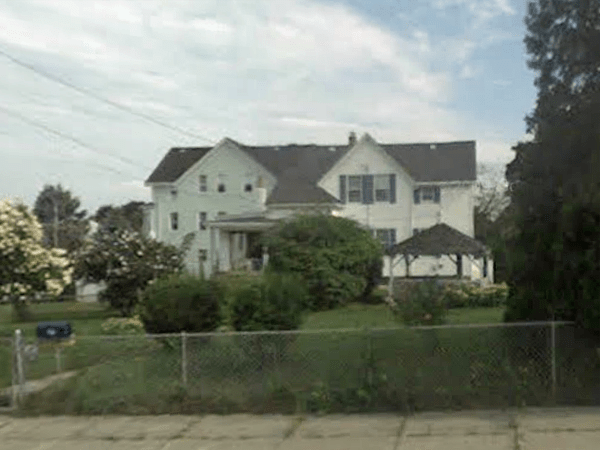
The Homestead
My maternal grandfather had passed by the time of the first photo. He is recorded as the person interviewed in the census. He was a fuel oil truck driver for Texaco. He made $1800 per year.
I stole the title for this post, from an NPR article. The son being interviewed exclaimed that his mom was the bomb.com. I just liked the syncopation and latched on to it.

Chief Pontiac on the Hood of a 1940 Deluxe
I heard it on NPR that the nation’s champion chess team is moving to Saint Louis. Last year, I reported that the World Chess Hall of Fame moved to Saint Louis. This week, I learned that the entire Texas Tech chess team followed its ‘Queen’ to Webster University. The Texas chess program had grown rapidly, but Texas Tech wasn’t ready to grow with the program, is the story in the news. Coach Susan Polgar said, “Saint Louis today is the center of chess in America. It just seemed like a perfect fit.” Apparently so, because her entire team followed her.
Chief Pontiac’s father was a Odowa and his mother a Ojibwa. He grew up in 18th century Detroit. He lived peacefully there with the French, but then the French lost the Seven Years War and ceded the Northwest Territories to the British. British and Indian relations soon went from bad to worse, and culminated in Pontiac’s Rebellion. Pontiac unsuccessfully besieged Fort Detroit, but the rebellion did succeed in capturing eight other British forts, from Ohio to Indiana to Northern Michigan. After the war, Pontiac retreated to Illinois. He was murdered in Cahokia, some say assassinated. There was a £200 price on his head. He is buried somewhere in Saint Louis.
OK, so I have provided only two roads to Saint Louis, and one ended badly. There are many more, but these two I learned of this week. In the interest of full disclosure, I should mention that both Anne and Dan are alumni of Webster. As an aside, last month Webster announced an expansive building plan. Planned in multiple phases over multiple years, it is scheduled to eventually replace the art building. Dan won’t recognize his alma mater.
Saint Louis is enamoured with its former Saint Louis residents. So much so, it almost takes on the George Washington slept here caricature. It is also academic if its prodigal sons ever return. If you don’t really have a hometown, then you adopt one. I’ve lived in many towns over the years. By the time that I graduated from college, my dorm address was my longest residency. Now, after over thirty years, it is Saint Louis. Who says that a rolling stone cannot gather some moss? Maybe a truer title should be, all roads lead through Saint Louis. We do claim to be the gateway to the west, and Kansas City, our neighbor to the west claims that Saint Louis is really the gateway to the east. I guess that makes us the crossroads of America.