Bike to my Lou, my Darlin’

This is not some slodgy old Saturday post and I don’t mean that magazine. We rode out to face life, grabbed it with both hands and then held on with all our might. Trailnet’s group rides are not scheduled to start for another two weeks, but they did today. This season’s inaugural ride was entitled, “Bike to my Lou”, hence my original title.

“Bike to my Lou” began and ended at the Old Post Office Plaza. We rode the ‘long’ route, which was 16 miles. It was a mass start, no drop ride. It was family friendly. Griffin’s bike messenger/pizza delivery crew led the ride. They were emboldened by police backup. Basically, we ruled the road.

We toured downtown, sweeping to and fro through the city center. We ventured as far south as Soulard and then headed west to Lafayette Park. I saw Audrey in her front yard. Heading north, we made it to Crown Candy and the old north side. Afterwards, we cruised west to Grand, before returning to the start.

One of the advantages of Trailnet’s community rides is that you get to see parts of the city you wouldn’t normally see. In the last twenty years, I’ve only seen Crown Candy on these rides. Saint Stanislaus, the rebel parish, was on our route. One of the messengers pointed out a fallen down building, as a Paul McKee property (near North 20th and Saint Louis Ave.), the so-called ‘savior of the north side’. Between Saint Stanislaus, the Catholic Church and Paul McKee there are some shady land deals going down.

Riding together and staying together offered more opportunity for conversation than the normal Fun Club ride in rural Illinois. Anne and I had our fair share of conversations, but we also overheard a few too. Anne was speaking to a woman, who said that she had never been up in the Arch. The US Park’s ranger on Anne’s other ear gasped in surprise. The woman had to apologize that she had only been in town for two weeks. Passing along the foot of the Arch, a young woman called out to her significant, “I’m not gonna be ignored, Dan!” I mentioned that I was listening. She detailed the Alex, “Fatal Attraction” connection to her quote. I increased my cadence. A man asked his other, why had she shed her sweater? She said to better air out the arm pits. I redoubled my effort.

Wiki has this song originating in the early American western expansion. Eastern Protestants frowned on dancing. Skipping became a way to dodge their prohibitions. Wiki has lou as an Americanization of the Scottish word loo, which means love. I like that Saint Luv. We got 38 miles today and I’m beginning to feel them. Here is a great performance of the original song, followed by my lyrics.

Bike, bike, bike to my Lou,
Bike to my Lou, my darlin’.

American Creativity

Redbud on Rooftop

Creativity is the residue of time wasted. – Albert Einstein

Author Jonah Lehrer, has been touting his new book, “Imagine: How Creativity Works”. I haven’t read it, but I’ve heard it discussed on Slate’s “The Afterword”, Terry Gross’s “Fresh Air” and NPR’s “All Things Considered”. Mr. Lehrer has been busy. The book sounds interesting, because the interviews are fascinating. Lehrer covers individual creative genius, like Beethoven’s or Shakespeare’s, but where he is most captivating is when he discusses the creativity of modern, common men. He profiles three businesses, Proctor and Gamble, 3M and Pixar to illustrate his points.

With Proctor and Gamble, he discusses the development of the Swiffer cleaning line, and reinforces the power of persistence. 80% of the job is showing up. The ah-hah moment with Swiffer came, when researchers realized that people spend as much time cleaning their mops, as they do their floors. Hence, the disposable mopping surface.

3M sounds like a fascinating place to work. First it has the 15% rule. All employees are permitted to spend 15% of their work week doing what they want. They can work on their own pet project or they can just goof off. It is at about this time that Lehrer introduces the above Einstein quote. 3M also has a nearly one-to-one ratio between products and employees. This speaks to a company cultural diversity that is unheard of in American industry.

In between his stints at Apple, Steve Jobs ran Pixar. When it came time to set up the company’s new campus the original design called for three buildings, one for the artists, one for the engineers and one for the administrators. Jobs scrapped this idea and threw everybody together in the rehabbed shell of the original Del Monte canning factory. All employee services were placed around a central atrium. Not content with a single cafeteria, I guess he still remembered the cliques of high school; he centralized all of the bathrooms too. Now almost every employee has a “bathroom moment”, a moment in or on the way to or from the bathrooms, when an epiphany happened.

Lehrer uses the phrase, “it’s the human friction that makes the sparks”, to summarize the success of these three companies. He disposes with brainstorming, with a pooh-pooh. with brainstorming, the quantity of ideas is held more valuable than the quality of those ideas. He does value criticism. Constructive or not, a polite critique advances good ideas over bad.

To add my own 2¢ to this topic, I offer the following points. This blog is my creative outlet. My real work is still creative, but I have no available outlet to express it. As to whether I am actually creative within this blog, I’ll leave that to the reader’s discretion. I’ll also leave you the following Einstein quote, a quote that only true creative genius could pull off with humor.

The secret to creativity is knowing how to hide your sources. – Albert Einstein

A Wise Old Owl

A New Photo of Charles the Great Horned Owl

Chuck, a wise old owl who has fathered many clutches of owlets, sits as graphic for this post. He looks down in disapproval of the foolish, stupid and ignorant human goings-on below. It is my unfortunate task to have to enumerate these goings-on. And I can plainly tell you, it doesn’t help me to have to write this, with such a disapproving overseer, looking down over my shoulder. I guess that I’ll just have to do my humanly best.

The supermarket checkout line looked inviting, I should have done my usual U-scan, but I didn’t, and once you empty your basket of groceries onto the conveyor belt, you’re committed. Anyway, that’s what I say. The one guy ahead of me was handed his receipt just as I finished unloading my basket. Perfecto! Wait, he is now asking for his change that never appeared. The clerk re-checks the receipt and confirms the customer’s complaint. The clerk asks the customer to wait until the cash register drawer can be reopened, like after I’ve been rung up. The customer agrees and then just stands there, blocking my access to the card reader. Clerk, customer and I stand there for a moment, or two, or three. I eventually have to ask him to move, and he steps aside. I run my card and the process proceeds. The bagger had already bagged and placed into his cart the previous customer’s groceries. After the bagger had bagged my groceries, the other customer placed my goods into his cart too. This leads to a free-for-all between the bagger, the other customer and me. I ended up having to check and recheck my receipt versus my bags. I should have gone with the U-scans, but I kept my cool with the humans.

“The Chip” is the MRH High School newspaper. Dave wrote for it, when he was in high school. Anne brought a copy home and pointed out an article, “Flipping off, flipping opinions on Flipper”. In this editorial piece, the author questions the practices of capturing and killing dolphins. They are captured for exhibition at amusement parks like Sea World and killed for food in Japan. My complaint is not with the author’s politics, but with a statement, or rather, misstatement that is made. At one point the author takes the devil’s advocate position and argues, “Why shouldn’t these fishermen capitalize on the value of our flippered friends? They are mammals just like turkeys, chicken and cows. We eat them, so why not a dolphin?” I questioned Anne, how could the teacher allow such a mistake to go to print? Anne explained that a public error is sometime more instructive than a private one corrected.

This pre-dawn morning, through our open bedroom window, I heard an owl hooting. It couldn’t have been Chuck; we’re surely outside his range. Lying in the dark, I heard the owl’s “who-who-who-who”, followed by a long pause, and then “who-who-who-who” again. These rounds continued until either the owl flew on, or I fell asleep again. Thinking about these two stories, I glad that I didn’t lose my temper, but it was close. I also now see the wisdom of Anne’s explanation. Hearing about the foolishness of others, is often fun. Not joining into that foolishness gives one a sense of moral superiority. This feeling though is foolish, because at one time or another, we all play the fool. Anyway, that’s what Chuck tells me.

Stop the Flying Unicorns (STFU)

Dear Reader, after another day in 6th Grade Paradise, and a 27 mile bike ride to calm down, I decide to attempt the essay that the students were doing. Attached is the graphic organizer, and the first draft of my 5-P essay. It might be a little too sarcastic, but it is only a rough draft. If you’re not sure about some of the references, ask the kids. – Anne

Stop the Flying Unicorns

Many people are unaware that flying unicorns even exist, let alone of the problems flying unicorns can cause. Flying unicorns are dangerous, both to themselves and other animals and humans. Flying unicorns are messy, causing huge messes when they fly over buildings and cars. Most importantly, these cousins of Pegasus drive a wedge between the haves and have-nots leading to feelings of entitlement. Here is why the flying unicorns must be stopped.

Flying unicorns are dangerous, since they have wings, hooves, and a sharp horn on their head. Any one of these could cause injuries. They are rambunctious, and inclined to silly horseplay. Of course, this is natural, given that they are indeed related to horses, but it frequently leads to accidents, either to themselves or other people and animals around them. Flying unicorns seldom follow the rules, because they think the rules do not apply to special animals like them. This is another reason they may be a hazard.

Another problem of the flying unicorns is the mess they make. Anyone who has seen bird droppings on their car windows will have no desire to have animals the size of horses flying overhead. While bird droppings are disgusting enough, imagine what your school would look like if a flying unicorn had “an emergency” on the roof or playground. What’s even worse, the droppings look like silly putty, and some kids might play with it and throw it around. Perhaps, with time, flying unicorns could be trained in proper bathroom behavior, much as cats are trained to use litter boxes. However, flying unicorns also have a propensity to mess with other animals’ stuff, breaking it and tossing it around. They are only playing, they say, but this is another facet of why the flying unicorns must be stopped.

Lastly, but most importantly, is the social problems flying unicorns cause. It’s a well-known fact, (as reported in The Journal of Mendacity Unlimited, March 2012), that flying unicorns can only be tamed by quiet, hard-working scholars. This is patently unfair, as it pits the one-percent against the other 99% who do not have these attributes. We provide our students with pencils, paper, erasers and tape to further their education, why should we not also let all of our students have the resource of a flying unicorn? While dangerously rambunctious and admittedly messy, flying unicorns are also beautiful and fun to play with at recess. What a sad sight it is to see some entitled students enjoying the rewards of recess as the sun glints off the horn of their own unicorn, while others are forced to be inside writing. The loud raucous cries of those students and their flying unicorns cannot help but distract those who, through no fault of their own, except perhaps noisy procrastination, have lost the privilege of recess.

In conclusion, I hope I have persuaded you, gentle reader, that it is of utmost importance that we Stop the Flying Unicorns! Say it with me, “Stop the Flying Unicorns! Stop the Flying Unicorns! Stop the Flying Unicorns!” The dangerous horseplay must stop. The huge messes and wasted resources must stop. The sense of entitlement that rides roughshod over the rights of others to a studious environment and productive education should, nay (neigh?) must stop! Flying Unicorns must be stopped.

Old News

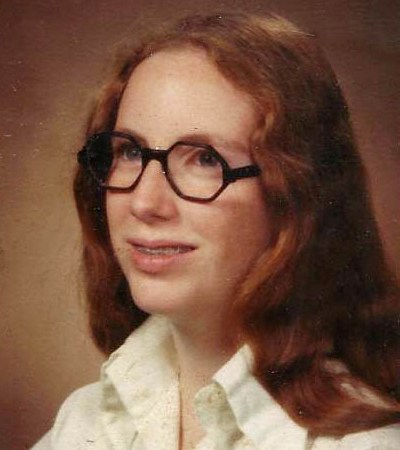
Anne in '72

Jim of the Ann Arbor Public Library had been scanning in old copies of the Ann Arbor News, “So of course I was searching for my name, and your name came up near mine in this list of Merit Scholarship finalists.” The article lists Pioneer High seniors who were presented with awards and scholarships at the 1972 Senior Banquet. That night, Anne received the following awards:

  • National Merit Scholarship
  • Michigan State’s Alumni Distinguished Scholarship
  • Michigan Competitive Scholarship & Tuition Grant
  • Classical Club Certificate
  • Mahlon Buell Science Award

I was sitting next to her that night, as I sit next to her tonight, almost forty years hence. Of the five awards, the second one was far and a way the most important. It meant a full ride scholarship to Michigan State University. She actually was able to get two degrees out of these monies. In his emails, Jim went on to update us on the doings of some of the named classmates. A lot of them became doctors, but then they were all smart kids.

Anita married a guy in foreign service and lived in Russia for a while. Carol had a kid despite her diabetes. Mike died in a diving accident. Carl is a doctor in Pittsburgh and comes back to town to play in a rockabilly band. Jack is a doctor in a Detroit suburb. Kathy is a doctor and still lives in town. Marilyn works at the U of M hospital. John owns a local record store. John was just in town, his parents live in the same building as my parents. Paul died of AIDS. His sister was my son’s kindergarten teacher.

Forty years is a long time, more than a lifetime for some. Hopefully just half of one for me, knock on wood. I can still remember that night. Anne was so excited, but I was clueless why. No one else knew, but she did. I saw the telegram later. When they called her name for the Alumni Distinguished Scholarship, our cafeteria table erupted. She still gets cachet from that award when she speaks to today’s seniors. Her point, you don’t have to break a sweat to get a full ride. You just have to work hard in the classroom. 

Our fortieth, high school reunion will be this fall. I’ll go as the dutiful spouse and will surely be asked, “So, where did you go to high school?” and then “Oh, which year?” Such is the price of anonymity, but for one more night, I’ll be able to bask in her reflected glow, and love it.

Court Rex Obama-Care?

Supreme Court Rex The Affordable Health Care Act?

Taking a page from the HuffPo, which I’ve just pilloried for doing this same thing, this post’s title and graphic, suggests monstrous must-read imminent disaster, on a Godzilla scale, while the real story is more ho-hum prosaic. Monday, the Supreme Court began hearing oral arguments on the validity of the Affordable Care Act, the so-called, Obama-care. This week the court will wrestle with the several legal questions: Can the court even rule on this law yet? Is the question ripe? [experts seem to think that it is] Can government force you to buy health insurance? If this mandate is struck down, does the entire law unravel? If not, which parts remain? Can Congress require the states to participate too? The importance and complexity of this case has moved the court to devote three days to arguments. Most cases get less than one.

One question that the court won’t be discussing is, will the court’s decision be based in politics? The short answer is yes, but this is an answer that like the rest of these questions, we will have to wait to hear the Supreme Court’s decision. Once the court pronounces judgement, how will this affect the presidential election? Will striking down Obama-Care, reinvigorate a troubled Republican ticket? If Romney is elected, will Obama-Care be replaced with Romney-Care? Will the Mayan calendar make all these questions moot?

Nine Jurassic jurists hold the key to all of these questions. Well not the Mayan one, and not the Romney ones either. At this point, I don’t think that even the Mayans could stave off his defeat. Pundits have the court parsed into four justices for the act and four against it. Justice Kennedy sits in-between these two factions, the sole deciding vote. In 2008, millions of Americans elected President Obama and his Democratic Senate and House majorities. They passed the Affordable Care Act. Now those millions of American votes sit in the balance, waiting for one more vote. It seems unfair, but it is the law.

What occurs this week in the Supreme Court and around it, is national politics, but it is not without personal implications. The Sunday Saint Louis Post-Dispatch led with an article about the death of Anna Brown. The article explained that Brown, a 29 year-old homeless woman, died in a Richmond-Heights jail cell, a little over an hour after being forcibly expelled from St. Mary Hospital’s emergency room. Both these locations are less than a mile from our house. She reported with leg pains and in the past had experienced swelling of the legs. St. Mary’s wasn’t the only area hospital to have failed her, just the last. The attending physician thought that she was just trying to score pain meds. An ultrasound showed no clots and the hospital discharged her, but she wouldn’t leave. She demanded treatment. The police were called. They hauled her away and she died in her cell from a blood clot in the lungs.

In other news, the dinosaur, Dick Cheney received a heart transplant. I wonder how the man without a heart is adjusting to his new organ. What are his feelings? Transplants are a life saver, a modern-day miracle, but is the system really working? I pray that you are in good health, but someday you won’t be. No one gets out alive. When your health fails and your life is held in the balance, where on the continuum will your care come from. Will you be treated royally like the former Vice-President, or kicked out onto the street, like Anna Brown? Either way, you are going to die. Life is just that fair.