
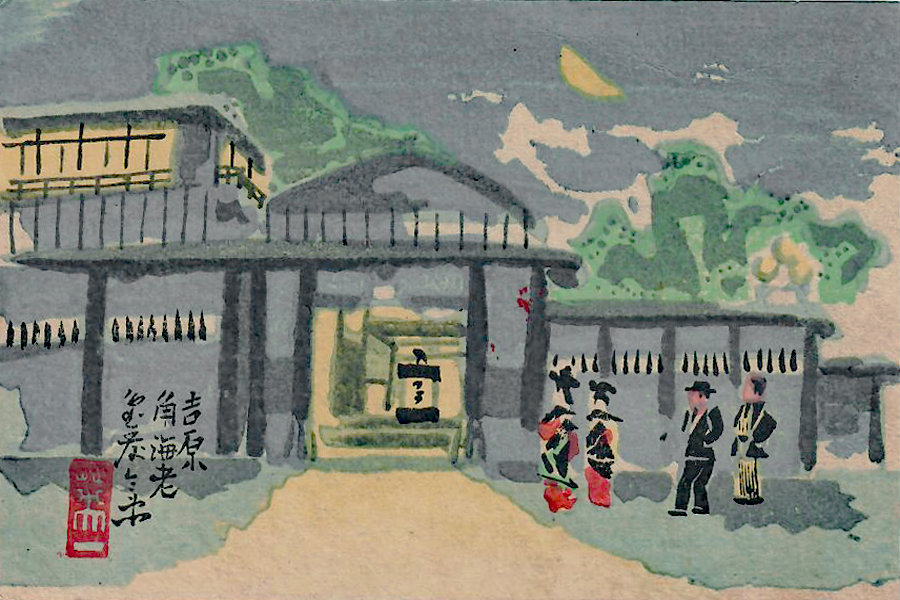

Yoshiwara Pleasure District in Edo Postcard
his image is likely a Japanese Ukiyo-e style print or painting depicting a scene from Yoshiwara, the famous licensed pleasure district of Edo (now Tokyo) during the Edo period (1603-1868).
Here’s what the image and its context suggest:
Yoshiwara (吉原): The visible text “吉原角海老” (Yoshiwara Kadoebi) in the lower left corner strongly indicates the setting. Yoshiwara was not just a red-light district but also a vibrant cultural center, influencing fashion, theater, and art, particularly ukiyo-e prints.
Scene Depiction: The print likely portrays life within Yoshiwara, possibly featuring courtesans, clients, or other figures associated with the “floating world” (ukiyo), a term describing the urban lifestyle of pleasure and entertainment. The buildings and figures are characteristic of Japanese Edo-period art.
Artistic Style: The flattened perspective, bold outlines, and distinct color palettes are hallmarks of ukiyo-e, a genre of Japanese woodblock prints and paintings that flourished during the Edo period.
Kadoebi (角海老): This likely refers to a specific establishment or a family name associated with the Yoshiwara district, as it was common for prominent establishments to be named in prints depicting the area.