
Peabody Opera House Bear

Peabody Opera House Bear

Pilobolus Program Cover
After Anne’s bicycle accident, I became the designated patron of the arts and accompanied Joanie to the Dance Saint Louis concert at the Touhill (still the best achievement of Missouri state government, in the thirty years that I have lived here) on Saturday night. The dance troupe Pilobolus, one of the season’s highlights, was in town from NYC. Named after a fungi, Pilobolus succeeds in showing some fun, with its nearly all guy cast.
The most fun piece was “All Is Not Lost”, which was originally created with the band OK Go. The stage is set as a split-screen. On the left-hand side is a large screen video projection of the dance that occurs on stage right. The camera is on the floor, pointed up and looking through a glass table top. This dance piece is like a Busby Berkeley-esque music video. Here is the OK Go music video, it shows only the camera’s POV, but adds more production values than were available on stage.
Sunday has been a quiet day. Anne is getting around better than she was yesterday, the drugs seem to be helping. The swelling in her pinky has gone down some, conversely her soon to be many bruises are starting to come in. While the drugs help with her pain and stiffness, they also make it difficult for her to concentrate on her school work. Speaking of school, whether or not she feels up for school tomorrow, is the big question ahead of us now.
I went for a bike on Sunday afternoon, all alone this time. The weather had already begun to shift from Saturday’s record high to Monday’s expected freeze. It was very windy today, something about the gales of November coming early. I kept getting leaves blown into my spokes, which would then proceed to clickety-clack away, a steady metronome for company, on a grey November afternoon.
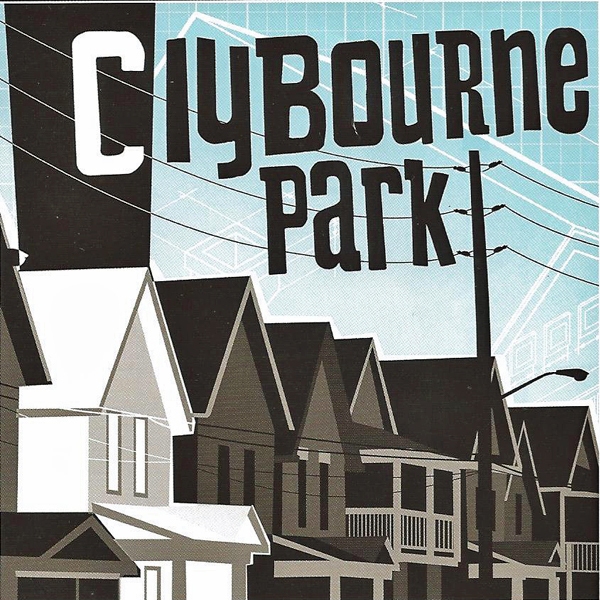
Clybourne Park
This weekend has been almost an entire theater season in just one weekend. Friday night, we saw “Daddy Long Legs” and on Saturday night, we saw “Clybourne Park”. Both shows were at The Rep. Friday night’s show was on the main stage, while Saturday’s Stages production was down below, in the basement, sort of speak.
“Clybourne Park” (2010) is a play by Bruce Norris written in response to Lorraine Hansberry’s play “A Raisin in the Sun” (1959). It portrays fictional events set before and after the Hansberry play and is loosely based on historical events. The play was awarded the 2011 Pulitzer Prize for Drama and the 2012 Tony Award for Best Play.
The first act of “Clybourne Park” is set in 1959 its events precede those portrayed in “A Raisin in the Sun”. In this act, the grieving parents Bev and Russ are planning to sell their home in the white middle-class Chicago neighborhood of Clybourne Park to the black family that was portrayed in “A Raisin in the Sun”. Their Korean War veteran son had just committed suicide and Russ blames the neighborhood for its callousness and cruelty to his son.
The second act was set fifty years later, in 2009. The scene is still the same, albeit somewhat worse for wear, Bev and Russ’s former living room. All of the actors reappear in new guises, some though portray characters with ties to the first act’s characters. In the intervening half-century, Clybourne Park has become an all black neighborhood. A gentrifying white couple is seeking to buy and McMansion the house. They are being forced to negotiate with local housing regulations and a black couple that represents the neighborhood. This racial role reversal soon devolves from discussions of zoning regulations into an angry shouting match about race. The play’s climax is introduced by a handyman, played by the same actor that played Russ. He unearths the son’s foot-locker that Russ had buried fifty-years ago. A short coda closes the play, back again in 1959, Bev finds her son writing [his suicide note] late at night, she says, “I believe things are about to change for the better.”
Joanie joined us last night. We had dinner together at Cyrano’s. A historical note: Hansberry’s originating play was based upon real events in the Chicago neighborhood of Washington Park. The three-story red brick at 6140 S. Rhodes, which was sold in 1937, is up for landmark status.

Daddy Long Legs
The story of “Daddy Long Legs” has been around for a century. Jean Webster’s contemorary novel first hit the shelves in 1912. A hundred years later to the year “Daddy Long Legs” the musical premièred at the Saint Louis Repertory Theater. Anne and I saw it last night and loved it.
This two actor show tells the story of Jerusha (Judy) Abbott (played by Ephie Aardema) the oldest orphan in the John Grier Home. She is plucked from obscurity by a mysterious benefactor, a self-described John Smith. Smith will pay for her college education under the stipulation that she write him a letter each month, telling him how she is doing. Sort of sounds like contract blogging. He will never respond to her letters and she will never know who he is. In the home, Jerusha catches a glimpse of the shadow of her benefactor from the back, and knows he is a tall long-legged man. She jokingly takes to calling him Daddy-Long-Legs.
Jervis Pendleton (played by Kevin Earley) is the young man who is her secret benefactor. Daddy-Long-Legs is neither elderly nor bald, as Jerusha imagines. Reading her witty letters month after month Jervis grows fond of the girl. He decides to meet her not as Daddy-Long-Legs, but as himself, never revealing his secret identity. His duplicity becomes the central tension of this show.
Jean Webster wrote an epistolary novel and this convention is preserved in the musical adaptation. Jerusha’s letters are read aloud and also sung by both characters. Webster couched her tale in the form of a love story, but her real narrative was that of a young woman who discovers the world, loves what she finds and learns to find her place in it.
Almost since its inception, “Daddy Long Legs” has been adapted to movies and now theater. “Daddy Long Legs” films include, in 1919 (Mary Pickford), 1931 (Janet Gaynor and Warner Baxter), 1935 (Shirley Temple) and 1955 (Fred Astaire and Leslie Caron). I’ve read, or rather have tried to read epistolary novels in the past. I’ve been left with the experience of reading somebody else’s junk mail. The live-action of musical theater really brought this literary art form to life. As I’ve said before, we really enjoyed this show.
Before the show, we had dinner at CJ Muggs. Annie’s parents were seated at the table next to ours. We compared notes on our LA artist children and then talked politics. Both topics were quite mutually agreeable to us all.

Rainbow Saint Louis City Flag
The Laramie Project is Moisés Kaufman’s play about the tragic death of Matthew Shepard and the events that surrounded his murder in Laramie, Wyoming. The 1998 murder of this University of Wyoming gay student made national news and left the towns people of Laramie in the center of a media firestorm. Kaufman and members of the Tectonic Theater Project made repeated trips to Laramie for more than a year and they eventually interviewed over 200 people. These interviews and the recitation of the words spoken and recorded form the basis of this play.
It starts shortly after Matt Shepard’s nearly lifeless body was discovered and encompasses the arrest of the two men that perpetrated this hate crime, Shepard’s eventual death from his horrible wounds and subsequent funeral. In the funeral scene the Reverend Fred Phelps of the Westboro Baptist Church of Topeka, Kansas is portrayed. The play goes on to cover the trial, conviction and subsequent commutation of the death penalty to life imprisonment of Shepard’s two attackers, at Matt’s parents request. A brief epilogue closes this nearly three-hour play.
Maplewood-Richmond Heights High School produced this performance of The Laramie Project. Their performance run only encompassed four shows. The first two on Thursday and Friday conflicted with the Cardinals. Late this week, the school district published a letter informing parents, students and faculty that they had been informed that the Westboro Baptist Church planned to protest the play.
If you have not heard of these awful, awful people, Westboro loves to protest at the funerals of fallen American service people. They hold up signs that say that it was God’s will that this soldier was killed, because this country condones homosexuality. Many of their placards are much blunter and cruder. I saw this for myself today. Westboro has actually made a business from being so offensive. No one wants them to appear and may municipalities have tried to limit their freedoms of religion, association and speech. They sue, win and collect punitive damages that fund their church. Another Saint Louis municipality, Manchester, is currently in litigation over these arguments.
Rather than try to limit these people, Maplewood decided to fight fire with fire. A counter demonstration was organized and Anne let me know that in no uncertain terms we were going. “But Honey, what about the basement?” Why do I try, more importantly, why do I even question her wisdom. We had a great time. The morning’s gloom had cleared and bright blue skies greeted us. By my unscientific count there were at least 200 people on our side, maybe more. I counted and recounted Westboro’s half-a-dozen.
Like I said, we had a great time. We met old friends. Anne introduced me to more people than I could keep track of and we had a party. We had signs that spoke of love and acceptance and we had all of the best songs. We sang America the Beautiful, Kum bay ya and Imagine. We rocked! Meanwhile across the football field the half-dozen visitors were fenced in by traffic cones and enough police to go man-to-man, and still keep the bench warm.
After the rally we went in to see the matinée performance. By MRH standards the cast was huge, twenty students and four teachers. Even so, most of the cast had to double or triple up to cover the sixty plus characters. On Friday, at work, I was trying to describe this gathering storm to one of my co-workers. He dabbles in Community Theater, so I thought that he would be sympathetic. This was not to be. He recommended Guys and Dolls. Maybe he is just partial to musical theater? He has a good voice. As a MRH taxpayer, I am extremely pleased with this production.

The Brooklyn Bridge
Friday night was date night, dinner and a show. Dinner was at Cyrano’s, whose smaller portions always leave room for dessert. We shared their delicious key lime pie. At the Rep, the show was Neil Simon’s Brighton Beach Memoirs. This is the opening offering of this season at the Rep. This coming-of-age comedy focuses on Eugene Morris Jerome, a Polish-Jewish American teenager who experiences puberty, sexual awakening, and a search for identity as he tries to deal with his family. Set in Depression era Brooklyn, this play tells the story of one family’s struggle to make ends meet and to stay together. Included in the cast is his older brother Stanley, his parents Kate and Jack, and Kate’s sister Blanche and her two daughters, Nora and Laurie, who come to live there after their father’s death. This story is the first play of the Eugene Trilogy, the three quasi-autobiographical plays written by Simon, Brighton Beach Memoirs, Biloxi Blues and Broadway Bound. Brighton Beach was an enjoyable show, with a strong cast and a happy ending. Well, as happy as it can be, having just escaped the Nazis. As per usual, with our season tickets near the end of the run, this show ends tomorrow.
I had to Google Map (there he goes again) Brighton Beach to find out that it is at the southern end of Brooklyn. The bridge picture is from our 2009 visit to NYC. We were in the city for the five boroughs bicycle ride. We rode through Brooklyn, but nowhere near Brighton Beach.
It turns out that both of Anne’s sisters were in NYC today. Jay and Carl flew home today, after a week’s vacation there and Jane arrived just yesterday. Jay and Carl and even Rey were in NYC, visiting Ashlan, who lives in Manhattan. During intermission, I felt that we had joined them too.
The three sisters original NYC connection dates back to their father, Harry. He grew up in the Bronx. Looking at the program last night, Anne noticed that Neil Simon is only a month older than Harry. That makes them same age contemporaries of the thirties and early forties in NYC.
Eugene, Simon’s character had two passions in life. There was baseball, by which I mean the New York Yankees. Harry is still a loyal Yankee fan. Eugene’s other passion was girls. In the play Eugene is still quite young, maybe thirteen years old. He doesn’t know much about women, but he really wants to learn more. I’ve pushed this comparison as far as I would like to and would also be politic. Except to say that they both joined the Army in the summer of 1945, but even for Eugene that is another story.